Retatrutide Research Explained: Complete 2026 Guide for Researchers

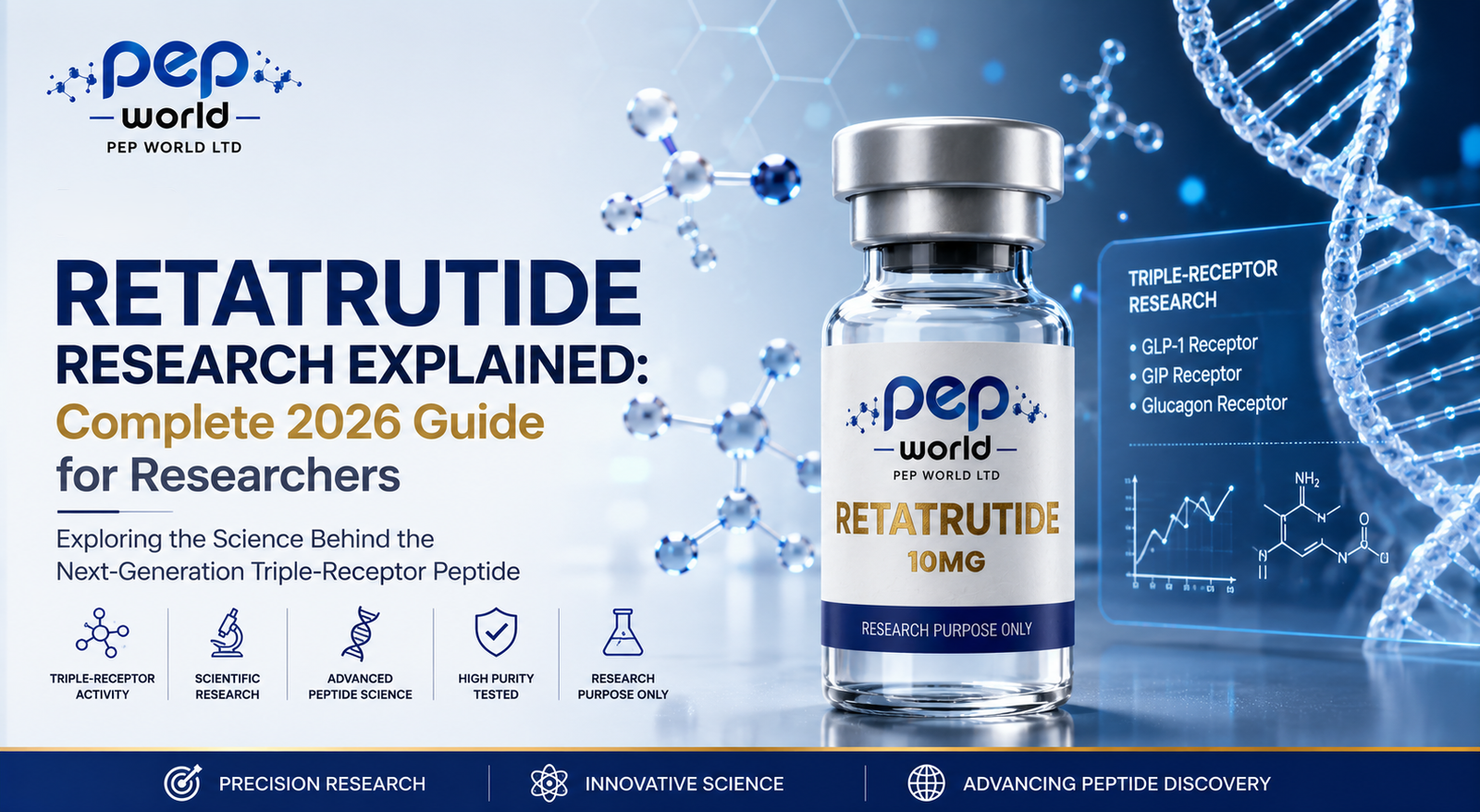
Peptide research continues to evolve at an impressive pace, and few compounds have generated as much scientific interest recently as Retatrutide.
Unlike earlier research peptides that primarily targeted one biological pathway, Retatrutide is being investigated because of its ability to interact with multiple metabolic receptors simultaneously. This makes it an exciting subject for researchers studying complex biological signaling rather than isolated mechanisms.
As new laboratory studies continue to emerge, Retatrutide has become one of the most discussed research peptides of 2026.
In this guide, we’ll explore what Retatrutide is, how it works from a research perspective, and why scientists believe it could help answer important questions in metabolic biology.
What Is Retatrutide?
Retatrutide is an experimental synthetic peptide currently being investigated in scientific research.
It belongs to a newer generation of peptides that interact with multiple hormone receptors involved in metabolic regulation.
Rather than focusing on a single signaling pathway, researchers are studying how Retatrutide influences several interconnected biological systems at the same time.
Because of this unique profile, it has become an important tool for researchers investigating:
- Hormone signaling
- Energy regulation
- Metabolic pathways
- Cellular communication
- Multi-receptor biology
It is important to note that Retatrutide remains an investigational compound and is intended for research purposes only.
Why Is Retatrutide Different From Earlier Peptides?
Many earlier peptides studied only one receptor.
Retatrutide is different because researchers are examining its interaction with three separate receptor pathways.
These include:
- GLP-1 receptor
- GIP receptor
- Glucagon receptor
Scientists are interested in understanding how these combined interactions influence complex biological systems compared with activating only one receptor.
This multi-target approach is one of the biggest reasons Retatrutide has attracted attention throughout 2026.
Understanding Retatrutide's Triple-Receptor Mechanism
One reason researchers find Retatrutide particularly interesting is its ability to activate multiple signaling pathways simultaneously.
Current laboratory research focuses on how these receptors communicate with each other and influence broader metabolic regulation.
Scientists are investigating:
- Receptor coordination
- Cellular signaling networks
- Hormonal communication
- Energy metabolism pathways
- Molecular interactions
Understanding these mechanisms may improve scientific knowledge of metabolic biology and receptor signaling.
Why Researchers Are Paying Close Attention
Retatrutide isn’t attracting attention simply because it’s new.
Researchers are interested because it allows them to investigate biological systems that are difficult to study using single-receptor peptides.
Current research explores areas including:
Multi-Receptor Biology
Studying how several hormone receptors work together instead of independently.
Cellular Communication
Understanding how cells respond when multiple signaling pathways are activated simultaneously.
Peptide Engineering
Retatrutide also demonstrates how modern peptide engineering is moving toward more sophisticated molecular designs.
Future Drug Discovery
Although Retatrutide itself is still under investigation, its design may influence how future research peptides are developed.
Current Areas of Scientific Research
Current laboratory investigations include:
- Metabolic signaling
- Endocrine communication
- Receptor activation
- Molecular pharmacology
- Peptide optimization
- Structural biology
- Protein-receptor interactions
These studies help researchers understand biological mechanisms rather than establish therapeutic outcomes.
How AI Is Supporting Retatrutide Research
Artificial intelligence has become increasingly valuable in peptide research.
Researchers now use machine learning to:
- Model peptide structures
- Predict receptor interactions
- Analyze molecular binding
- Improve peptide design
- Reduce experimental trial and error
Retatrutide represents one example of how computational biology and laboratory research are becoming increasingly connected.
Challenges Researchers Still Face
Despite growing interest, many scientific questions remain unanswered.
Researchers continue studying:
- Long-term molecular stability
- Receptor selectivity
- Structural optimization
- Biological variability
- Laboratory reproducibility
Like any experimental peptide, findings must continue to be validated through rigorous research.
Why Quality Matters in Research
High-quality peptides are essential for producing reliable laboratory data.
Researchers generally prioritize products that provide:
- High purity
- Independent laboratory testing
- Certificate of Analysis (COA)
- Batch consistency
- Proper storage conditions
Without consistent material quality, experimental results become more difficult to reproduce.
Related Research Topics Worth Exploring
If you’re interested in Retatrutide research, you may also want to explore:
- Peptide Stability Explained
- AI-Designed Peptides
- How Researchers Verify Peptide Purity
- Research Use Only (RUO): What It Means
- The Most Studied Research Peptides in 2026
Together, these topics provide a broader understanding of modern peptide research.
Frequently Asked Questions
Is Retatrutide approved for medical use?
Retatrutide is an investigational peptide currently being studied in research settings. Always refer to the latest regulatory information in your jurisdiction.
Why is Retatrutide attracting scientific attention?
Researchers are interested in its multi-receptor mechanism, which provides opportunities to study complex metabolic signaling pathways.
What makes Retatrutide different from many other peptides?
Unlike peptides that primarily target a single receptor, Retatrutide is being investigated for its interaction with three receptor systems, making it a unique subject for laboratory research.
Is Retatrutide intended for research purposes?
Products supplied by PepWorld are intended for research purposes only and are not intended for human consumption or clinical use.
Final Thoughts
Retatrutide represents one of the most closely watched developments in modern peptide research.
Its unique multi-receptor profile has opened new opportunities for studying metabolic signaling, hormone communication, and molecular biology. While research is still evolving, the growing scientific interest reflects how peptide engineering continues to advance beyond traditional single-target approaches.
As laboratories explore increasingly sophisticated peptide designs, compounds like Retatrutide are likely to remain at the forefront of peptide research discussions throughout 2026 and beyond.
Disclaimer
All products available through PepWorld are supplied for research purposes only. They are not intended for human consumption, therapeutic use, diagnosis, or treatment. Researchers should follow all applicable laboratory regulations and handling procedures.