Research Peptide Handling Guide (2026): Storage, Stability & Laboratory Best Practices

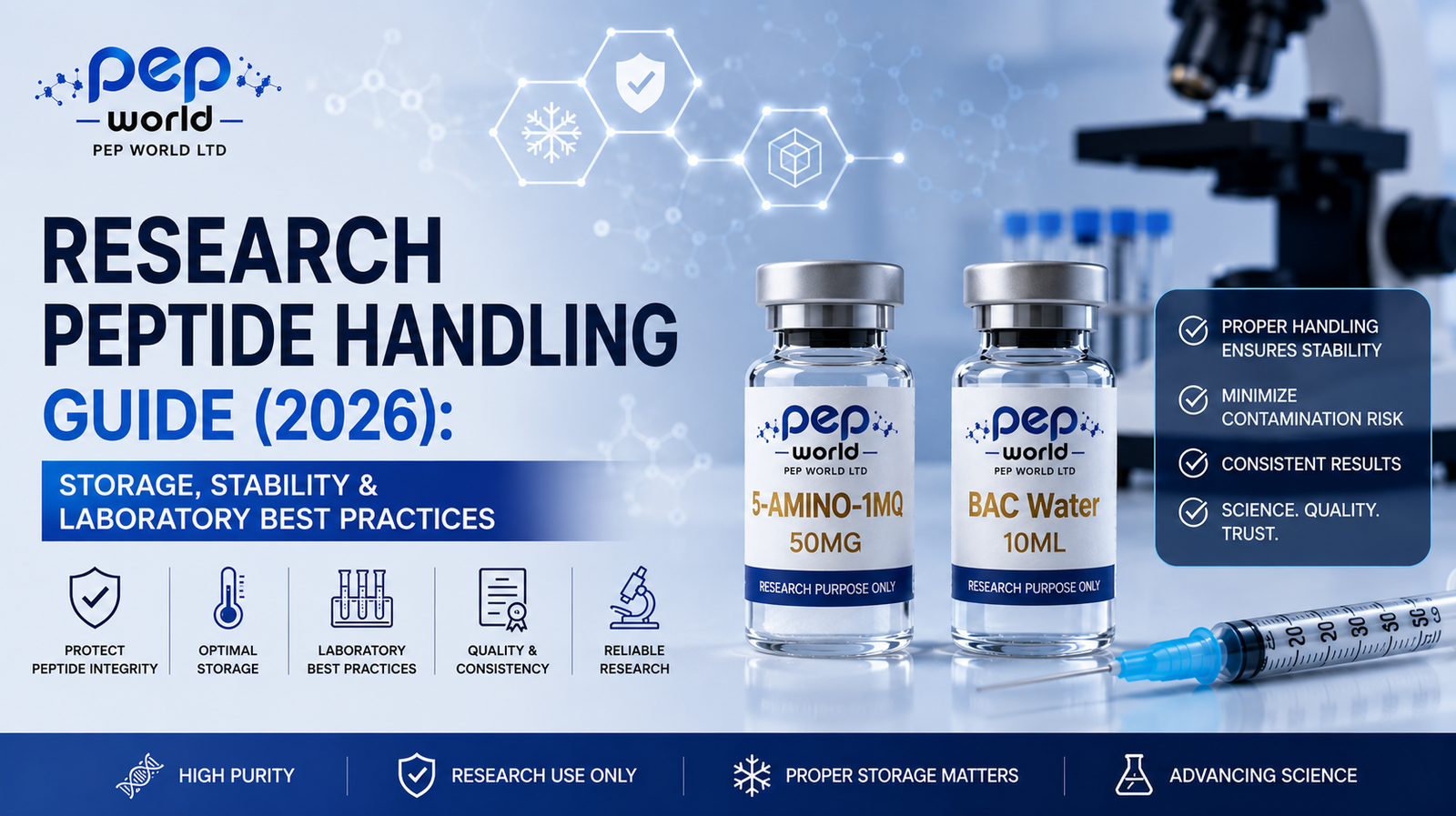
Research Peptide Handling: Best Practices for Storage, Reconstitution, and Laboratory Quality
Research peptides have become an increasingly important part of scientific investigation, supporting studies in molecular biology, cell signaling, regenerative science, and metabolic research. However, even the highest-quality peptide can produce unreliable experimental data if it is not handled correctly within the laboratory.
Researchers often invest considerable time selecting high-purity materials, reviewing analytical reports, and designing experimental protocols. Yet one overlooked factor can compromise an entire study: improper handling.
Temperature fluctuations, contamination, poor storage practices, repeated freeze-thaw cycles, and inconsistent laboratory procedures can all affect peptide integrity. While modern peptides are often more stable than many people assume, maintaining good laboratory practices remains essential for reproducible research.
This guide explores the fundamentals of research peptide handling, explaining why proper storage, contamination control, and quality assurance matter throughout every stage of laboratory work.
Why Proper Peptide Handling Matters
Scientific research depends on consistency.
Researchers expect experimental materials to behave predictably across multiple experiments. When a peptide degrades or becomes contaminated, the resulting data may become inconsistent, making interpretation difficult.
Proper handling helps researchers:
- Preserve peptide integrity
- Improve experimental reproducibility
- Reduce unnecessary material loss
- Maintain laboratory quality standards
- Protect long-term research investments
In many laboratories, careful handling is considered just as important as selecting a high-quality peptide supplier.
Understanding Lyophilized Research Peptides
Many research peptides are supplied in a lyophilized (freeze-dried) form.
Lyophilization removes water from the peptide under carefully controlled conditions, leaving behind a dry powder that offers improved stability during storage and transportation.
Researchers prefer lyophilized peptides because they generally provide:
- Better long-term stability
- Easier transportation
- Lower degradation risk before use
- Consistent storage conditions
The freeze-drying process helps preserve peptide quality until researchers are ready to prepare materials for laboratory studies.
Factors That Influence Peptide Stability
Although peptides are designed for scientific research, they remain sensitive biological molecules.
Several environmental factors may influence stability over time.
1). Temperature
Temperature is one of the most significant variables affecting peptide preservation.
Consistent storage temperatures help minimize unnecessary degradation while reducing variation between experiments.
Laboratories typically follow supplier recommendations regarding appropriate storage conditions for both lyophilized and prepared peptide solutions.
Avoiding unnecessary temperature fluctuations is generally considered good laboratory practice.
2). Moisture
Moisture can influence the stability of dry peptide materials.
For this reason, researchers usually store peptides in tightly sealed containers under controlled laboratory conditions to minimize unnecessary exposure.
3). Light Exposure
Certain peptides may be sensitive to prolonged exposure to light.
Many laboratories reduce this risk by storing peptide vials in appropriate containers or protected storage environments, especially during long-term storage.
4). Air Exposure
Repeated opening of laboratory containers increases exposure to humidity and airborne contaminants.
Minimizing unnecessary handling helps preserve sample integrity throughout the research process.
Why Laboratory Cleanliness Matters
Peptide quality depends on more than the product itself.
The laboratory environment also plays an important role.
Researchers commonly work in clean preparation areas to reduce the likelihood of contamination from dust, microorganisms, or foreign particles.
Good laboratory practices often include:
- Cleaning work surfaces
- Using sterile laboratory equipment where appropriate
- Wearing suitable personal protective equipment (PPE)
- Following institutional laboratory procedures
- Proper disposal of laboratory waste
These practices help maintain sample quality while improving experimental consistency.
Avoiding Contamination During Research
Cross-contamination can compromise experimental results even when peptide purity is extremely high.
Researchers generally reduce contamination risk by:
- Using clean laboratory equipment
- Handling one sample at a time
- Clearly labeling research materials
- Following standardized laboratory protocols
- Limiting unnecessary exposure to open air
Attention to these details supports accurate and reproducible research.
Common Laboratory Mistakes That Can Affect Research Materials
Many issues arise not because of poor manufacturing but because of inconsistent laboratory procedures.
Some examples include:
Ignoring Storage Recommendations
Using storage conditions that differ from supplier guidance may affect long-term stability.
Repeated Temperature Changes
Frequently moving materials between different storage environments can introduce unnecessary variability.
Poor Sample Organization
Mislabeling or improper inventory management may create confusion during experiments and increase the risk of using incorrect materials.
Contamination from Shared Equipment
Using laboratory equipment without appropriate cleaning procedures may introduce unwanted variables into research.
Delaying Quality Checks
Inspecting research materials before use helps researchers identify potential issues before beginning an experiment.
Choosing a Reliable Research Peptide Supplier
Selecting a supplier involves more than comparing prices.
Researchers often evaluate suppliers based on:
- Independent analytical testing
- Product transparency
- Batch consistency
- Quality documentation
- Customer support
- Professional packaging
- Reliable shipping practices
A trustworthy supplier contributes to better laboratory confidence and more reliable research outcomes.
Storage Best Practices for Research Laboratories
Every laboratory operates under its own protocols, but several general principles are widely recognized.
These include:
- Following supplier storage recommendations
- Maintaining stable environmental conditions
- Protecting materials from unnecessary environmental exposure
- Clearly labeling stored samples
- Monitoring storage equipment regularly
Consistent laboratory organization reduces unnecessary variability throughout the research process.
Building Reliable Research Through Standard Operating Procedures
Successful laboratories often rely on Standard Operating Procedures (SOPs) to maintain consistency.
SOPs help ensure that every researcher follows similar methods when:
- Receiving materials
- Recording batch information
- Preparing samples
- Storing research materials
- Documenting observations
Standardization improves reproducibility and makes experimental results easier to compare over time.
Frequently Asked Questions
A lyophilized peptide is a peptide that has undergone freeze-drying to improve stability during storage and transportation.
Proper handling helps preserve sample integrity, reduce contamination risk, and improve the reproducibility of laboratory research.
Temperature, moisture, light exposure, contamination, and storage conditions can all influence peptide stability.
Consistent batches reduce variability between experiments and improve confidence in research results.
Final Thoughts
Successful peptide research depends on much more than selecting a promising compound. The quality of laboratory handling, storage practices, documentation, and quality assurance all contribute to reliable scientific outcomes.
By maintaining consistent laboratory procedures, following supplier recommendations, and prioritizing quality control, researchers can reduce unnecessary variability and help ensure that experimental results remain as reliable and reproducible as possible.
As peptide science continues to advance, careful handling will remain an essential part of responsible laboratory research.
Research Purpose Only Disclaimer
All products available through PepWorld are supplied for research purposes only. They are intended solely for laboratory and scientific research and are not intended for human consumption, diagnosis, treatment, or therapeutic use. Researchers should always follow applicable institutional policies, laboratory safety standards, and supplier recommendations when handling research materials.