Kisspeptin Research Explained (2026): Hormonal Signalling & Reproductive Biology

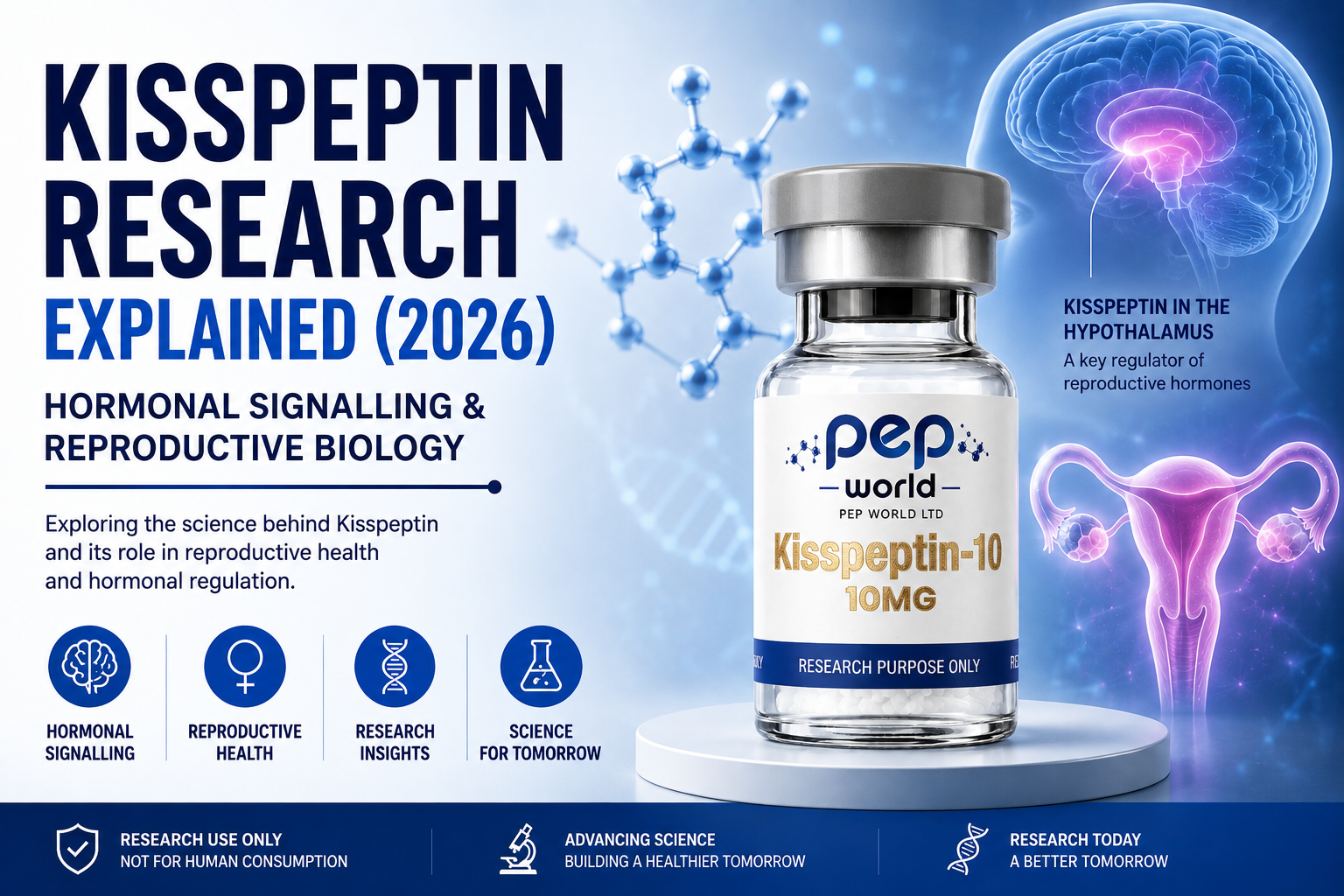
Kisspeptin Research Explained (2026): Hormonal Signalling & Reproductive Biology
Hormones regulate nearly every biological process, from growth and metabolism to reproduction and development. Among the many signalling molecules studied today, Kisspeptin has become one of the most important peptides in reproductive biology research. Since its discovery, Kisspeptin has transformed scientists’ understanding of how the brain communicates with the reproductive system. Rather than acting directly on reproductive organs, Kisspeptin functions as a messenger between the hypothalamus and hormone producing pathways, making it a key focus in laboratory studies exploring fertility, endocrine regulation, and neurobiology.
This guide explores what Kisspeptin is, how it works, why researchers are interested in it, and what current scientific evidence suggests.
Research Use Only: Products sold by PepWorld are intended strictly for laboratory and scientific research. They are not intended for human consumption or therapeutic use.
What Is Kisspeptin?
Kisspeptin is a naturally occurring peptide encoded by the KISS1 gene. It binds to the KISS1 receptor (GPR54), triggering a signalling cascade that ultimately influences reproductive hormone release. Scientists often describe Kisspeptin as one of the body’s “master regulators” of reproductive hormone signalling because it sits near the top of the hormonal communication pathway. Rather than producing hormones itself, Kisspeptin activates neurons that stimulate the release of gonadotropin-releasing hormone (GnRH).
GnRH then regulates:
- Luteinizing Hormone (LH)
- Follicle-Stimulating Hormone (FSH)
- Downstream reproductive hormone pathways
This central role explains why Kisspeptin has become one of the most widely studied neuroendocrine peptides.
Why Is Kisspeptin Important in Research?
Researchers are interested in Kisspeptin because it appears to influence several interconnected biological systems.
Current laboratory research investigates its potential involvement in:
- Reproductive hormone signalling
- Puberty initiation
- Fertility regulation
- Neuroendocrine communication
- Hypothalamic function
- Endocrine disorders
- Hormonal feedback mechanisms
These studies help scientists better understand normal reproductive biology as well as conditions where hormonal regulation may be disrupted.
How Kisspeptin Works
The signalling pathway begins inside the hypothalamus.
The simplified process looks like this:
- Kisspeptin binds to the KISS1 receptor.
- GnRH neurons become activated.
- GnRH is released.
- The pituitary gland responds.
- LH and FSH production increases.
- Reproductive hormone pathways become activated.
Because Kisspeptin sits at the beginning of this cascade, even small changes in its activity may influence downstream hormone signalling.
Current Areas of Kisspeptin Research
1. Reproductive Biology
One of the largest areas of research focuses on reproductive system regulation.
Scientists investigate how Kisspeptin influences:
- Ovulation signalling
- Testicular hormone regulation
- Ovarian function
- Gonadal development
- Hormonal feedback loops
Many researchers consider Kisspeptin essential for understanding reproductive physiology.
2. Puberty Research
Kisspeptin appears to play an important role in initiating puberty. Laboratory studies suggest activation of Kisspeptin signalling may help trigger the hormonal changes associated with reproductive maturation.
Researchers continue studying:
- Timing of puberty
- Early puberty
- Delayed puberty
- Developmental endocrinology
3. Neuroendocrine Communication
Hormones and the nervous system constantly communicate.
Kisspeptin provides researchers with an excellent model for studying:
- Brain-to-endocrine signalling
- Hypothalamic regulation
- Hormonal communication networks
- Neural control of reproduction
4. Fertility Research
Although research remains ongoing, scientists continue exploring Kisspeptin’s role in fertility related signalling pathways.
Areas of investigation include:
- Hormone release patterns
- Ovulatory signalling
- Spermatogenesis regulation
- Reproductive endocrine control
5. Endocrine Disorders
Researchers are also investigating whether altered Kisspeptin signalling may contribute to certain endocrine conditions.
Current laboratory work explores:
- Hormonal imbalance
- Hypogonadism
- PCOS-related signalling
- Reproductive hormone dysfunction
Further research is needed before conclusions can be drawn.
What Makes Kisspeptin Different from Other Research Peptides?
Unlike peptides primarily studied for metabolism or tissue repair, Kisspeptin focuses on communication between the brain and reproductive endocrine system.
| Peptide | Primary Research Area |
|---|---|
| Kisspeptin | Hormonal signalling |
| Ipamorelin | Growth hormone pathways |
| CJC-1295 | GH release research |
| BPC-157 | Tissue repair research |
| GHK-Cu | Cellular regeneration research |
| MOTS-c | Energy metabolism research |
This unique mechanism makes Kisspeptin valuable in neuroendocrine research.
Recent Scientific Findings
Recent studies continue expanding knowledge about Kisspeptin’s biological importance.
Researchers have observed:
- Strong expression within hypothalamic pathways
- Central role in GnRH activation
- Important interactions with reproductive hormones
- Complex hormonal feedback regulation
- Potential influence across multiple endocrine pathways
Scientists continue exploring additional biological functions beyond reproduction.
Laboratory Handling Considerations
To maintain research quality, laboratories generally follow established peptide handling procedures.
Common best practices include:
- Store lyophilised material according to manufacturer recommendations.
- Minimise repeated freeze-thaw cycles.
- Use sterile laboratory equipment.
- Record preparation dates.
- Follow validated laboratory protocols.
Proper handling helps preserve peptide stability during research.
Frequently Asked Questions
Kisspeptin is a signalling peptide that regulates hormone release rather than functioning as a traditional endocrine hormone itself.
Because it plays a central role in reproductive hormone signalling and neuroendocrine communication.
Current research focuses on:
- Fertility
- Puberty
- Endocrinology
- Neurobiology
- Hormonal regulation
Yes. Kisspeptin remains an active area of endocrine and reproductive biology research worldwide.
Final Thoughts
Kisspeptin has become one of the most significant peptides in modern reproductive biology research. By acting as a critical messenger between the brain and the endocrine system, it offers researchers valuable insights into hormonal signalling, reproductive development, and neuroendocrine regulation. While scientific understanding continues to evolve, current evidence highlights Kisspeptin as an essential research tool for exploring the complex pathways that control reproductive physiology. As new laboratory studies emerge, Kisspeptin is expected to remain a major focus in endocrine and reproductive science.
Disclaimer
All products mentioned are intended for research purposes only. They are not approved for human consumption, medical use, or therapeutic application.