Retatrutide vs Tirzepatide vs Semaglutide (2026 Research)

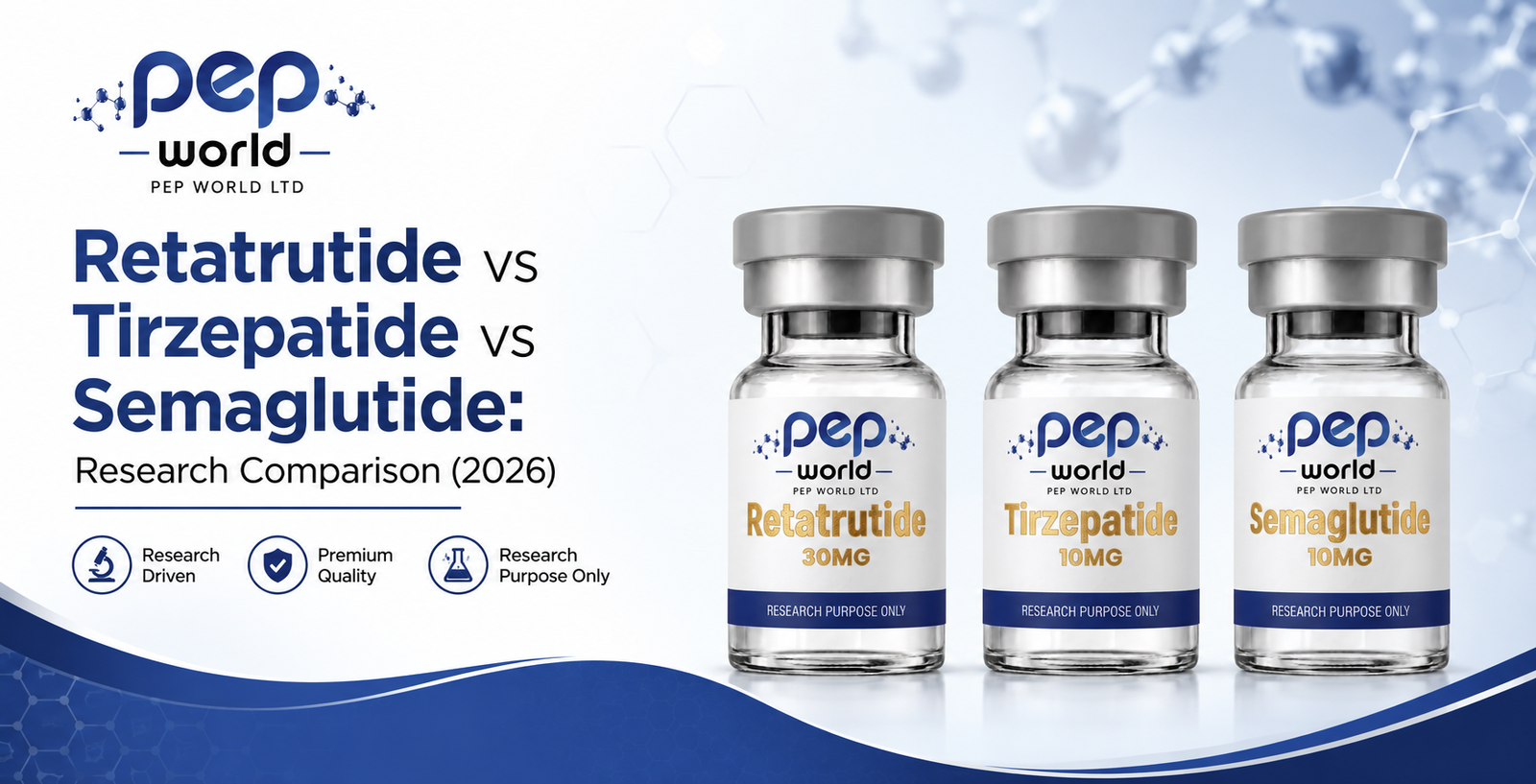
Retatrutide vs Tirzepatide vs Semaglutide: What's the Difference in Research? (2026)
Peptide research continues to evolve at a remarkable pace, and few compounds have attracted as much scientific attention as Retatrutide, Tirzepatide, and Semaglutide. Although these peptides share similarities in metabolic research, each has a unique mechanism that makes it valuable for different areas of investigation.
This guide compares these three research peptides based on their biological targets, laboratory findings, stability, and current research trends in 2026.
Disclaimer: This article is intended for educational and scientific discussion only. All peptides discussed are for laboratory research purposes only and not for human consumption, medical use, or self-experimentation.
Quick Comparison Table
| Feature | Retatrutide | Tirzepatide | Semaglutide |
|---|---|---|---|
| Peptide Class | Triple Receptor Agonist | Dual Receptor Agonist | GLP-1 Receptor Agonist |
| Targets | GLP-1, GIP, Glucagon | GLP-1, GIP | GLP-1 |
| Research Complexity | High | Moderate | Moderate |
| Current Research Interest | Very High | High | High |
| Research Applications | Metabolic pathways | Metabolic regulation | Glucose regulation |
| Development Stage | Newest | Established | Established |
Understanding Each Research Peptide
1). Retatrutide
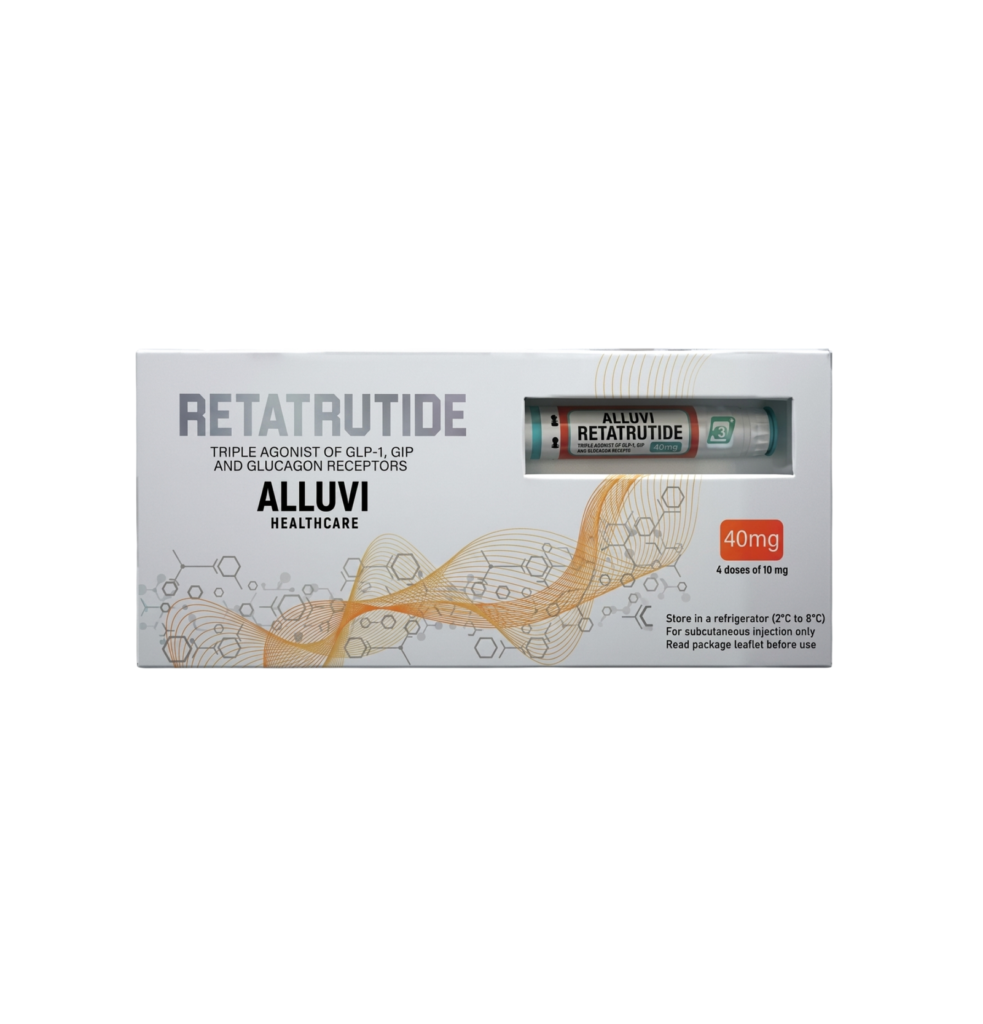
Retatrutide represents one of the newest developments in peptide science. Unlike earlier compounds, it activates three separate biological receptors:
- GLP-1 receptor
- GIP receptor
- Glucagon receptor
Because of this triple-agonist mechanism, researchers are investigating whether multiple metabolic pathways can be influenced simultaneously within controlled laboratory environments.
Current research is exploring:
- Energy metabolism
- Fat oxidation pathways
- Appetite signaling mechanisms
- Multi-receptor activation
- Long-term metabolic adaptations
Retatrutide has become one of the most discussed research peptides during 2026 because it combines several biological mechanisms into one molecule.
2). Tirzepatide
Tirzepatide introduced a significant advancement by targeting two hormone receptors rather than one.
It activates:
- GLP-1 receptor
- GIP receptor
Scientists continue studying Tirzepatide because it provides an opportunity to examine how dual receptor activation influences metabolic signaling.
Laboratory investigations include:
- Hormonal interactions
- Insulin signaling pathways
- Energy balance
- Appetite regulation
- Long-term peptide stability
Compared with Retatrutide, Tirzepatide offers a simpler mechanism while still expanding beyond traditional GLP-1 research.
3). Semaglutide
Semaglutide remains one of the most extensively researched GLP-1 peptides available today.
Unlike the other two compounds, it focuses solely on:
- GLP-1 receptor activation
Its long research history makes it a common reference point in peptide laboratories worldwide.
Research areas include:
- Glucose metabolism
- Appetite-related signaling
- Gastric emptying mechanisms
- Endocrine responses
- Peptide pharmacology
Because scientists already understand much of its biological behavior, Semaglutide is frequently used for comparison when evaluating newer peptide candidates.
Mechanism of Action Comparison
The biggest distinction between these peptides is how many biological pathways they target.
Semaglutide
- Single receptor activation
- GLP-1 only
Tirzepatide
- Dual receptor activation
- GLP-1 + GIP
Retatrutide
- Triple receptor activation
- GLP-1 + GIP + Glucagon
This progression demonstrates how peptide development has become increasingly sophisticated over the past several years.
Why Is Retatrutide Receiving So Much Attention?
Retatrutide is attracting considerable interest because researchers are studying whether activating three receptors simultaneously produces different biological responses compared with older peptides.
Potential research advantages include:
- More comprehensive metabolic pathway investigation
- Broader receptor interaction studies
- Improved understanding of hormone coordination
- Expanded obesity and metabolism research models
Its novelty also means many questions remain unanswered, making it one of the most active areas of peptide research.
Research Applications
These peptides are commonly investigated in laboratory settings for:
- Metabolic pathway research
- Endocrine signaling
- Energy expenditure
- Appetite regulation
- Obesity-related biological mechanisms
- Hormone receptor interactions
- Peptide pharmacology
- Glucose metabolism studies
These applications remain strictly within controlled scientific research environments.
Stability Considerations
Researchers handling any peptide should follow appropriate laboratory procedures.
General recommendations include:
- Store lyophilized peptides according to supplier guidance.
- Limit repeated freeze thaw cycles after reconstitution.
- Use sterile laboratory equipment.
- Protect samples from excessive heat and light.
- Document storage conditions throughout the study.
Proper handling helps maintain peptide integrity and improves consistency across experiments.
Which Peptide Is Most Advanced?
This depends on the research objective.
Semaglutide
Ideal for:
- Established GLP-1 studies
- Historical comparisons
- Single-pathway investigations
Tirzepatide
Suitable for:
- Dual hormone receptor studies
- Metabolic interaction research
- Comparative laboratory projects
Retatrutide
Most appropriate for:
- Advanced metabolic research
- Triple receptor investigations
- Emerging peptide science
Each compound contributes valuable insights into peptide biology, but they differ significantly in complexity and current research focus.
Frequently Asked Questions
Yes. Retatrutide is a newer research peptide and remains an active subject of ongoing scientific investigation.
Retatrutide activates three receptors:
- GLP-1
- GIP
- Glucagon
Absolutely. It remains one of the most widely studied GLP-1 peptides and serves as an important benchmark for newer compounds.
Yes. Comparative laboratory studies help scientists evaluate differences in receptor activation, signaling pathways, and biological responses.
No. The products discussed on PepWorld are supplied for laboratory research purposes only and are not intended for human consumption or therapeutic use.
Final Thoughts
Retatrutide, Tirzepatide, and Semaglutide each represent important milestones in peptide research. While Semaglutide laid the groundwork for modern GLP-1 investigations and Tirzepatide expanded the field through dual-receptor activity, Retatrutide is pushing research further with its triple-receptor design. As peptide science continues to advance in 2026, comparative studies of these compounds will help researchers better understand metabolic signaling, receptor interactions, and the broader potential of peptide-based laboratory research.Whether your focus is on established GLP-1 pathways or emerging multi-receptor mechanisms, selecting high-quality research materials and following proper laboratory practices remain essential for generating reliable experimental data.